

Bee San Diego Is Here — And Here's Why It Had to Be
By Kemi Pavlocak, SAVAGE BEE-CHES
I've been sitting with this idea for a while. If you've ever caught me speaking at a small business event, a sustainability panel, or anything in the environmental space, you've probably heard me say some version of this: we are losing the fight to marketing and capitalism, and if we want to win, we have to learn from it.
Let me explain what I mean.
Those of us who understand what's happening to our ecosystems who see the signs, who feel the urgency we're often speaking to the already-converted. And meanwhile, the forces doing the most damage have mastered the art of making people feel good about consuming more. That gap between environmental concern and everyday consumer behavior isn't a knowledge problem. It's a connection problem.
People are not bad. Nobody wants to be the reason a species goes extinct. Nobody wants their city's ecosystem to collapse. But adulting is exhausting. There's so much going on bills, work, the news, just getting through the week. When conservation asks people to carry one more weight, most people understandably put it down.
So those of us who understand the issue better have to meet the public more than halfway. We have to stop lecturing and start inviting.
The Honey Bee Lesson
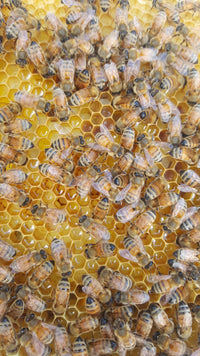
The Washington Post ran a piece called "Why backyard beehives are saving the wrong bees" that made a point I've been trying to articulate for years and I encourage you to read it. The public did a genuinely remarkable job of "saving the bees." Honey bee populations recovered. People planted gardens, bought local honey, put "save the bees" on everything. And it worked because someone found something tangible that people could experience, enjoy, and feel good about participating in.
The problem? We were saving the wrong bee.
Honey bees are not native to North America. They are commercially managed, imported livestock and according to research, backyard hive programs can actually harm native bee populations by outcompeting them for the same nectar and pollen sources. The science on this has been building for years. It's not a fringe opinion.
I know this in large part because of the work of Professor James Hung known in scientific circles as the "Lord of the Bees" who spent years at UC San Diego documenting, collecting, and cataloguing the native bees of San Diego County. His research, including a landmark annotated checklist of every bee species found in the county, revealed something extraordinary: San Diego is a global hotspot of bee biodiversity, home to over 700 native bee species more than anywhere else in the continental United States.
His studies also showed something sobering. As development fragments our open spaces, native bee species disappear from those areas at alarming rates. And when honeybees move in, they dominate the most abundant floral resources, leaving our native bees the ones that have been here for thousands of years with less. His paper documenting how non-native honeybees disproportionately monopolize floral resources in San Diego's biodiversity hotspot is some of the clearest evidence we have that the honeybee narrative, however well-intentioned, has been crowding out the real story.
James's work is what first made this feel urgent and personal to me. These bees have been living in our canyons, our coastal sage scrub, our desert edges long before any of us arrived. They are San Diego. And almost nobody knows they exist.
That's not a failure of caring. That's a failure of connection.
Where Bee San Diego Came From
My first epiphany was tattoos.
The tattoo industry has exploded over the past decade. People are walking billboards for the things they love, the places they belong to, the moments they want to carry forever. What if a San Diego native bee was one of those things? What if you could wear one?
I happen to know a beautiful human being who is one of the most talented tattoo artists I've ever met Meg Knobel of Outdoor Traditions. Meg is also a powerhouse in the bikepacking community and has experience using her art to raise funds and awareness for causes she believes in. When I came to her with this idea, she didn't hesitate. I'm so grateful for her.
But not everybody wants a tattoo. And with the way the economy has been, not everyone can make that kind of splurge right now. So I needed more ways for people to participate.
Enter WorldBeat Cultural Center led by the incredible Makeda Cheatom, one of the most consistent sources of support and community in San Diego. They had already expressed interest in creating a native bee sanctuary on their grounds in Balboa Park. A real, public space where San Diegans could see for themselves what a healthy native bee ecosystem looks like. That became our anchor the place where the whole campaign leads.
Then there's food. Food brings people together. It captures our attention in a way almost nothing else does. And if I'm being honest, the honey industry figured this out long ago they used honey to convince people they were helping bees, and it worked beautifully. We're just going to be a little less self-interested about it.
Our collaborators at Julia Mae's Kitchen were in immediately they're dedicating a dish to a San Diego native bee. And that one yes got me thinking: what if I could get other local food and beverage businesses to each claim a bee? What if visiting each one became an adventure?
That's how the San Diego Bee Trail Poker Run was born.
What Bee San Diego Actually Is
Bee San Diego is a city-wide campaign launching May 1, 2026, built on one belief: conservation works best when it's also Diversity and Inclusion.
I had a list of bees I was considering but also want to get Professor James Hung's opinion. He is still the foremost authority on San Diego's native bees, now an Assistant Professor at the University of Oklahoma continuing his research on pollinator conservation. Once finalized the six native bee species will be illustrated for the campaign. Each bee will be transformed into an original illustration by Meg Knobel, turned into a collectible 4×6 art card, and available exclusively at one business on the trail. The species are being kept secret until each partner reveals their bee through their own storytelling one business, one bee, one chapter at a time.
Here's how it works:
The San Diego Bee Trail Poker Run takes you across San Diego neighborhoods from Old Town to Barrio Logan to Balboa Park with a partner business at each stop holding one exclusive card. Visit every stop, collect every card, and you'll earn a free sixth mystery card at WorldBeat Cultural Center. That sixth card is a mystery the species will stay secret until the very first person completes the trail and claims it at WorldBeat.
Each card can also be taken to Meg Knobel at Outdoor Traditions the home of #InkForPollinators and redeemed for a permanent tattoo of that bee. Or framed. Or simply collected. Meg is not a trail but she is the creative director and tattoo destination for the entire campaign.
Confirmed trail stops so far:
- SAVAGE BEE-CHES — Old Town San Diego (Trail Stop 1 & Campaign HQ)
- Julia Mae's Kitchen — Barrio Logan (Trail Stop 2)
- Open Stop — Bakery or café (Trail Stop 3 — seeking partner)
- Open Stop — Community business (Trail Stop 4 — seeking partner)
- WorldBeat Cultural Center — Balboa Park (Trail Destination)
We're still looking for a bakery or café and one more community business to complete the trail. If that's you — keep reading.
The Spirit Bee — Because This Is About Everyone
Bee San Diego is very much about diversity and inclusion — and I know not every organization or business can be a physical trail stop. So we created something for them too: the Spirit Bee.
Any business, school, organization, or individual that wants to be part of the story but can't host a trail stop can be assigned a San Diego native bee to research and celebrate. They make a short storytelling video about their bee, and they get added to our Spirit Bee map — a growing, living record of how many native bees our community is willing to acknowledge, appreciate, and make their own.
I want to see how many bees this city can name before the summer is over. We have 700 to work with.
Why This Matters Beyond the Bees
I want to be direct about something.
Small businesses are the ones holding communities together right now — and they are constantly overlooked, underfunded, and undervalued in favor of the corporations that are extracting from those same communities. Our native bees face the exact same dynamic against the commercially kept honeybee.
Bee San Diego is a campaign about bees, yes. But it's also proof that local organizing — across food, art, culture, and community — can do what institutions and nonprofits often can't: reach the person who never signed a petition, never attended a rally, never thought about a native bee in their life. Until they got one tattooed on their arm, or ate a dish inspired by one, or stopped by Old Town to Barrio Logan to Balboa Park because they wanted to collect them all.
That's the campaign. And I do feel like this is something that only someone from a diverse background that has constantly been gatekept can put together. Because I know how it feels to be disregarded and what's needed to make it right.
Join Us
If you or someone you know is a San Diego business or organization that wants to be part of Bee San Diego — as a trail stop, a Spirit Bee participant, or a community sponsor — please reach out.
📧 inf@savagebee-ches.boutique 🌐 savagebee-ches.boutique/pages/bee-san-diego
#BeeSanDiego · #InkForPollinators · #SanDiegoBeeTrail
Kemi Pavlocak is the owner and managing member of SAVAGE BEE-CHES, San Diego's only honey boutique. Woman · Minority · Veteran Owned.
Leave a comment